

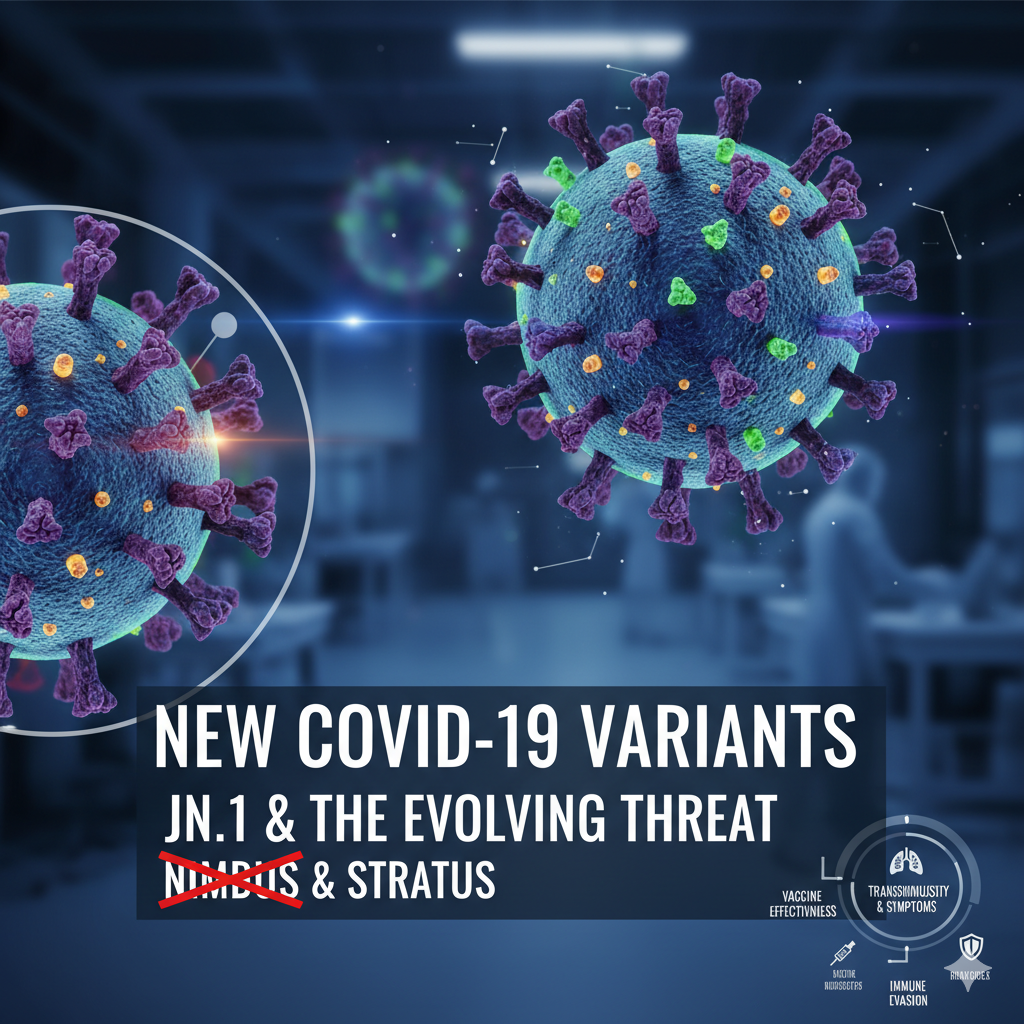
The SARS-CoV-2 virus, the causative agent of COVID-19, has proven to be a formidable and relentlessly evolving adversary. Since its emergence, it has continuously mutated, giving rise to new variants that have driven successive waves of infection across the globe. The era of the Omicron variant, which began in late 2021, marked a significant shift in the pandemic’s trajectory. Omicron’s descendants have since dominated the viral landscape, characterized by their remarkable ability to evade prior immunity and spread with astonishing efficiency. While colloquial or fictional names like “Nimbus” or “Stratus” might circulate on social media, the scientific community tracks these new threats through a precise system known as Pango lineage classification. The current dominant players, such as the JN.1 lineage and its offshoots, represent the latest chapter in this ongoing evolutionary saga. Understanding their characteristics—how they spread, the illness they cause, and how well our defenses work against them—is crucial for navigating the current phase of the pandemic.
This article provides an in-depth analysis of the real-world Omicron sub-variants circulating globally. We will delve into the genetic changes that make them so successful, examine their impact on transmissibility and disease severity, evaluate the effectiveness of the latest vaccines and boosters, and outline the strategies that remain vital for public health and personal protection.
The Genetic Arms Race: How Variants Like JN.1 Achieve Dominance
The engine of viral evolution is mutation—random changes in the virus’s genetic code. While most mutations are harmless or even detrimental to the virus, some confer a survival advantage, allowing the new version to outcompete its predecessors. For SARS-CoV-2, the most critical mutations often occur in the gene that codes for the spike protein, the part of the virus that latches onto our cells to initiate an infection. The spike protein is also the primary target of the antibodies our bodies produce after vaccination or a previous infection.
Key Mutations and Their Consequences
The story of recent variants is a story of strategic mutations. The JN.1 variant, for example, is a direct descendant of the BA.2.86 lineage (nicknamed “Pirola”). BA.2.86 itself was notable because it carried over 30 mutations in its spike protein compared to its XBB.1.5 predecessor, a leap in evolution not seen since the original Omicron variant appeared.
However, it was an additional, seemingly minor mutation that transformed BA.2.86 into the global powerhouse JN.1. This key change, known as the L455S mutation in the spike protein, significantly enhanced JN.1’s ability to bind to the ACE2 receptor on human cells, effectively making it “stickier” and more efficient at causing infection.
This combination of mutations gives variants like JN.1 two primary advantages:
- Increased Transmissibility: The enhanced binding affinity means that a smaller amount of virus is needed to establish an infection. This contributes to a shorter incubation period and allows the virus to spread more rapidly from person to person. It can more effectively compete for cellular real estate, establishing a foothold before the immune system can mount a robust initial defense.
- Immune Evasion: The numerous changes to the spike protein’s shape act as a form of camouflage. Antibodies generated in response to older variants or earlier versions of the vaccine may no longer recognize the new spike protein shape as effectively. This phenomenon, known as immune escape or immune evasion, is why people can be reinfected with COVID-19 despite being vaccinated or having had the virus before. The virus essentially learns to wear a new disguise, rendering our existing “wanted posters” (antibodies) less effective.
This evolutionary pattern—the accumulation of mutations that enhance both infectivity and immune evasion—is the hallmark of successful SARS-CoV-2 variants and the primary reason why we continue to see waves of infection.
Clinical Picture: Symptoms and Severity of Modern Variants
With each new dominant variant, a key question arises: does it cause more severe disease? Fortunately, for the variants that have emerged in the post-Omicron era, including JN.1 and its descendants, the answer has been largely reassuring.
A Shift to the Upper Respiratory Tract
Compared to earlier variants like Delta, which had a greater propensity for infecting the lower respiratory tract and causing severe pneumonia, Omicron and its sub-variants have shown a marked preference for the upper respiratory tract. This means they are more likely to cause symptoms similar to a common cold or the flu, including:
- Sore throat
- Runny nose or congestion
- Cough
- Fatigue
- Headache
- Muscle aches
- Fever or chills
The loss of taste and smell, a hallmark symptom of earlier waves, has become much less common with recent Omicron sub-variants.
Why Less Severe? The Role of Population Immunity
The generally milder clinical presentation is not necessarily because the virus itself has become intrinsically less virulent. A more significant factor is the high level of population immunity, often referred to as the “wall of immunity.” After years of vaccinations and repeated infections, a vast majority of the global population has some form of immunological memory of the SARS-CoV-2 virus.
When a new variant like JN.1 infects someone with pre-existing immunity, their immune system doesn’t have to start from scratch. T-cells, a crucial part of our cellular immunity, are particularly adept at recognizing different parts of the virus, not just the rapidly mutating spike protein. This memory allows the body to mount a faster and more effective response, clearing the virus before it can replicate uncontrollably and cause severe damage to the lungs and other organs.
However, it is critical to remember that “milder” is a relative term. For vulnerable populations—including the elderly, immunocompromised individuals, and those with underlying health conditions—an infection with any COVID-19 variant can still lead to severe outcomes, including hospitalization, long COVID, and death. Furthermore, a massive wave of infections, even if predominantly mild, can still strain healthcare systems due to the sheer volume of patients requiring care.
Holding the Line: Vaccine and Booster Effectiveness
Vaccination remains the cornerstone of the global strategy against COVID-19. However, as the virus evolves, our vaccine strategy must adapt in tandem.
The Need for Updated Formulations
The original mRNA vaccines were designed based on the spike protein of the ancestral SARS-CoV-2 strain from 2020. While they provided extraordinary protection against severe disease from early variants, their effectiveness at preventing infection from heavily mutated Omicron sub-variants waned significantly.
To address this, vaccine manufacturers have developed updated formulas. In the fall of 2023, health authorities recommended a monovalent booster targeting the XBB.1.5 sub-variant. The logic was to update the vaccine to more closely match the variants that were circulating at the time.
How Well Do Updated Vaccines Work Against JN.1?
While JN.1 is not an XBB variant, it is a descendant of a related Omicron lineage. Studies have shown that the XBB.1.5 vaccine still provides a crucial boost in protection against JN.1. Although it may not prevent infection entirely due to the variant’s immune-evasive properties, the antibodies and cellular immunity it generates are effective at neutralizing the JN.1 virus and, most importantly, significantly reducing the risk of severe disease, hospitalization, and death.
The updated vaccine essentially “updates” the immune system’s search image, making it better at recognizing and fighting off the newer forms of the virus. The goal of the current vaccination strategy has shifted from “sterilizing immunity” (preventing any infection) to preventing the worst outcomes of the disease. The CDC and other public health bodies continue to recommend that everyone eligible stay up-to-date with the latest available COVID-19 vaccine.
Beyond Vaccines: A Multi-Layered Defense Strategy
While vaccines are our most powerful tool, a comprehensive approach is necessary to manage the ongoing risk of COVID-19. Several other measures remain highly effective at reducing transmission and protecting individuals.
Antiviral Treatments
For those who do become infected, especially those at high risk of severe disease, effective antiviral treatments are available. Medications like Paxlovid (nirmatrelvir-ritonavir) and Remdesivir work by inhibiting the virus’s ability to replicate in the body. When taken early in the course of an infection, these treatments have been shown to be highly effective at preventing progression to severe illness and reducing the risk of hospitalization. These antivirals are not affected by the spike protein mutations that allow for immune evasion, so they have retained their effectiveness against new Omicron sub-variants.
The Power of Non-Pharmaceutical Interventions (NPIs)
The basic public health measures that became familiar early in the pandemic are still relevant and effective:
- Masking: Wearing a high-quality, well-fitting mask (such as an N95, KN95, or KF94) in crowded indoor spaces or during periods of high community transmission remains one of the best ways to reduce your risk of inhaling or spreading respiratory droplets.
- Ventilation: SARS-CoV-2 spreads through the air. Improving ventilation by opening windows and doors, using fans, or using high-efficiency particulate air (HEPA) filters can disperse and remove virus particles from indoor air, making these spaces safer.
- Hygiene: Basic hygiene, such as frequent handwashing with soap and water or using an alcohol-based hand sanitizer, remains a good practice to prevent the spread of respiratory viruses.
- Testing and Isolation: If you develop symptoms, it is important to get tested to confirm whether you have COVID-19. If you test positive, staying home and isolating yourself from others can prevent further spread to your family, colleagues, and community.
Conclusion: Navigating a New Normal
The emergence of new variants like JN.1 underscores a fundamental reality: SARS-CoV-2 is now an endemic human virus. It will continue to circulate and evolve, likely causing seasonal or periodic waves of infection for the foreseeable future. The era of aiming for “COVID zero” is over. Instead, our goal is to manage the virus in a way that minimizes its impact on our health, our healthcare systems, and our society.
This requires a sustained and dynamic approach. We must continue to monitor the virus’s evolution through genomic surveillance, update our vaccines as needed to keep pace with significant changes, and ensure equitable access to effective treatments. On a personal level, it means embracing a multi-layered approach to risk reduction—staying up-to-date on vaccinations, using masks and improving ventilation when appropriate, and staying home when sick.
While the fictional names “Nimbus” and “Stratus” may not be real, the threat from new variants is. By focusing on the real science, understanding the characteristics of lineages like JN.1, and utilizing the powerful tools at our disposal, we can confidently navigate the challenges of living with COVID-19. The virus will continue to change, but so too will our knowledge and our ability to respond.


Leave a Reply